
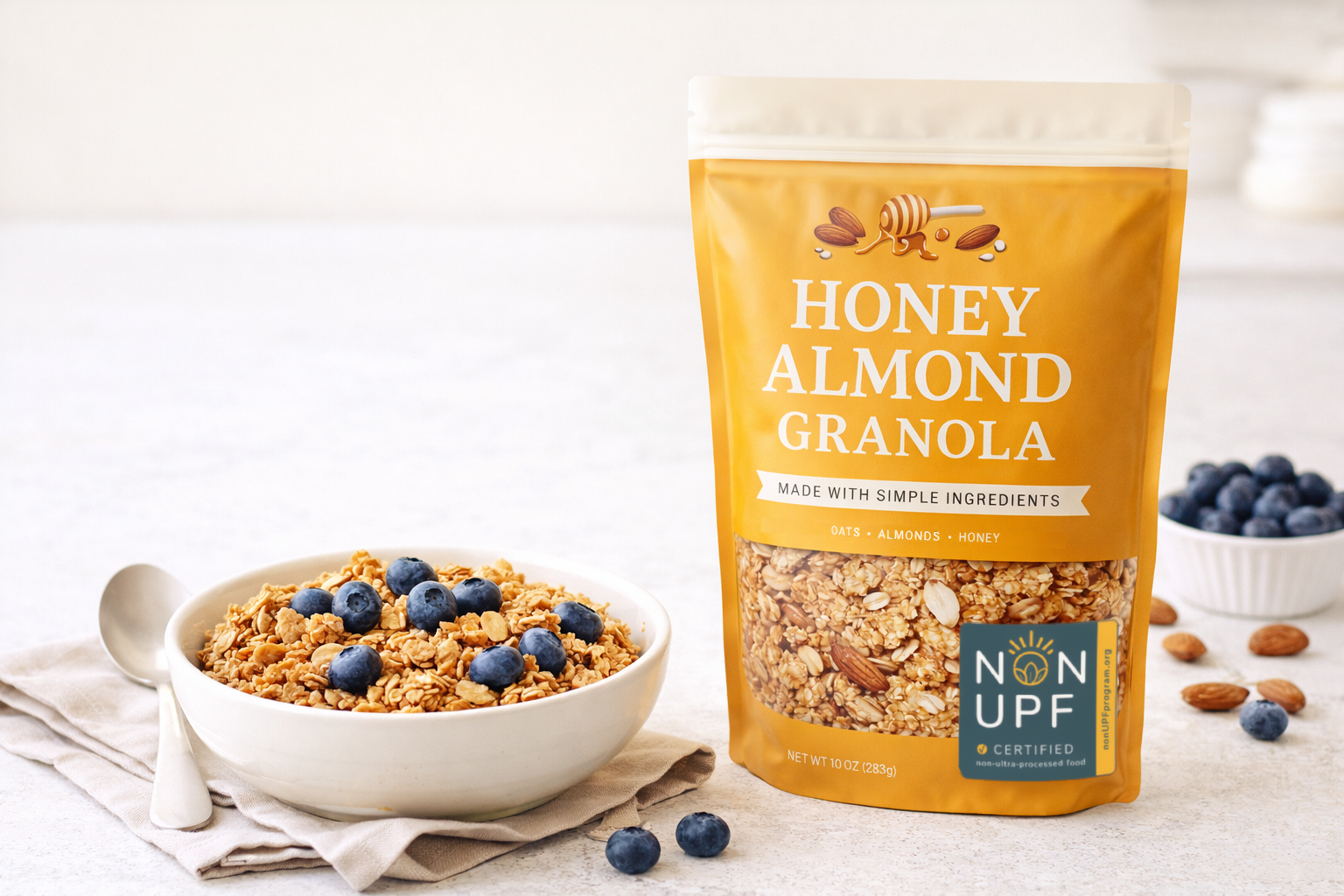
The New Standard for Food Transparency
Be recognized among the brands setting the new standard for non-UPF food.

BUILT BY:
Registered dietitians
–
Food scientists
–
Nova researchers
–
Nutrition scientists
–
Healthcare practitioners
–
Marketing specialists
–
Registered dietitians – Food scientists – Nova researchers – Nutrition scientists – Healthcare practitioners – Marketing specialists –


What is Non-UPF Certified?
A clear signal in a confusing food landscape
The Non-UPF Program certifies food products that avoid ultra-processed formulations and prioritize ingredient integrity.
Our certification mark is designed to give consumers faster confidence at the point of purchase — and give brands a credible way to stand apart.
Two Certification Pathways
Please read the descriptions carefully before selecting your path:
Option 1:
Select Whole Foods
Fees:
$50 per application
See discounted tiered pricing below for annual certification
If approved, the application fee applies to your first annual certification fee.
Select this path if your product(s) is:
100% fresh produce with no added ingredients
Example: bagged lettuce or fruitSingle-ingredient, uncooked legumes or grains in whole form, and raw nuts and seeds
Example: dry black beans, dry uncooked quinoa, raw cashews
Option 2:
General Food
Fees:
$75 application (per food)
$100 annual certification per food item
If approved, the application fee applies to your first annual certification fee.
Select this path if your product does not meet the SELECT WHOLE FOODS criteria.
The Founding Brand Advantage
How It Works
Three Steps to Certification
1
Submit Product Application
Provide food label, ingredient list, Technical Data Sheet, processing details, and pay application fee.
2
Expert Review
Our registered dietitian and food scientist team evaluates your product against the Non-UPF criteria.
3
Certification Decision
Products that meet criteria receive the Non-UPF Certification and licensing eligibility.
Typical Review Timeline
Most product evaluations are completed within 10 days after documentation is received.
What Certified Brands Receive
✓ The Non-UPF Certified Mark
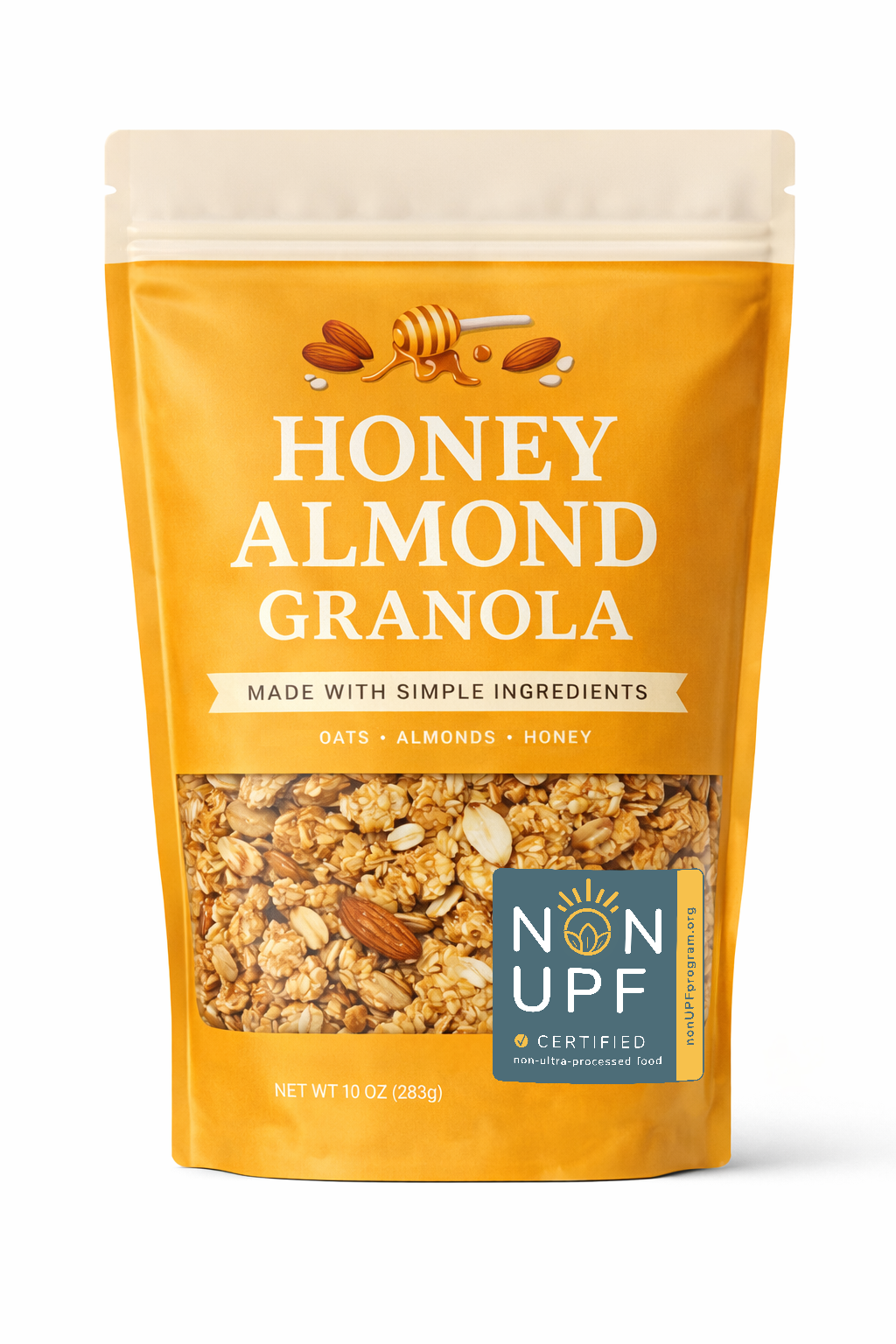
Use the certification badge on product packaging, websites, and marketing materials to signal ingredient integrity and transparency
✓ Freatured Brand Visibility
Certified brands may be highlighted through:
- Non-UPF Program website listings
- Educational webinars and expert panels
- Social meadia features
✓ Consumer Trust at Shelf
The Non-UPF mark helps shoppers quickly identify foods made without ultra-processed formulations
✓ Additional Sponsored Opportunities
Certified brands may be invited to participate in:
- In-store pilot programs
- Research collaborations
- Educational campaigns
- Featured video content with our culinary experts, dietitians, and scientists with social reach
Non-UPF Certification Criteria
Trademarked in June 2024 and launched in December 2024, The Non-UPF Program provides the first U.S. certification for non-ultra-processed foods.
Our criteria is grounded in science and guided by the Nova Classification system, which categorizes foods by how much they’ve been processed. Every product undergoes rigorous review by our internal team of food experts.
Allowed: Nova Group 1-3 Foods
Unprocessed/minimally processed foods, processed culinary ingredients, and processed foods.
Not Allowed: Nova Group 4 Foods
Ultra-processed foods (UPFs) are industrial formulations that contain ingredients (i.e.,high-fructose corn syrup, modified starches, emulsifiers) and/or additives (i.e., flavors, colors, artificial sweeteners) not commonly found in your kitchen. UPF also include foods that are pre-fried, extruded, or molded.
The Non-UPF Program has worked extensively since we trademarked our certification in June 2024 to identify hundreds of additives and ingredients classified as Nova Group 4. We will evaluate whether your product excludes any ingredients in Nova Group 4 and whether it falls under Nova 1-3 categories.
The following table identifies the types of ingredients, additives, and industrial processing methods found in Nova Group 4 Foods.
*Nova Group 4 allows the use of preservatives, but some are emerging as potentially harmful. For the non-UPF application, we are excluding these additional preservatives. We reserve the right to update the criteria.
| Not Allowed | Some Examples | Why It’s Not Allowed |
|---|---|---|
| Industrial Sugars & Syrups (Ultra-processed sugars) | High-fructose corn syrup • Fructose • Dextrose • Maltodextrin • Invert sugar • Fruit juice concentrates | Added for hyper-palatability, not found in traditional kitchens |
| Modified Starches & Carbohydrates | Modified starches • Maltodextrin | Industrial carbohydrate ingredients used for texture, binding, processing |
| Modified & Industrial Oils | Hydrogenated oils • Interesterified oils | Chemically altered oils not found in home cooking |
| Protein Isolates / Extracts | Soy protein isolate • Casein • Whey protein • Hydrolyzed proteins • Gluten • Mechanically separated meat | Extracted or reassembled through industrial processes |
| Cosmetic Additives | Flavors • Colorants • Non-sugar sweeteners • Emulsifiers • Thickeners • Emulsifying salts • Anti-foaming, bulking, gelling, glazing, foaming agents | Used for texture, taste, appearance, or shelf-stability — not nourishment |
| Some Soluble & Isolated Fibers | Polydextrose • Resistant dextrin • Wheat dextrin • Inulin | Industrial fiber additives; often used to enhance texture or make foods appear healthier without being part of the original food matrix |
| Industrial Processing Methods | Extrusion • Molding • Pre-frying | Industrial methods; not traditional cooking |
| Preservatives* | BHT • BHA • TBHQ • Propylparaben • Synthetic nitrates/nitrites • BVO | These preservatives are excluded due to emerging evidence of potential harm |
Two Certification Pathways
Please read the descriptions carefully before selecting your path:
Option 1:
Select Whole Foods
Fees:
$50 per application
See discounted tiered pricing below for annual certification
If approved, the application fee applies to your first annual certification fee.
Select this path if your product(s) is:
100% fresh produce with no added ingredients
Example: bagged lettuce or fruitSingle-ingredient, uncooked legumes or grains in whole form, and raw nuts and seeds
Example: dry black beans, dry uncooked quinoa, raw cashews
Option 2:
General Food
Fees:
$75 application (per food)
$100 annual certification per food item
If approved, the application fee applies to your first annual certification fee.
Select this path if your product does not meet the SELECT WHOLE FOODS criteria.
Comparison of Fees
| Application Type | Application Fee | Annual Certification Fee | Notes/What's Included |
|---|---|---|---|
| Select Whole Foods | $50 (non-refundable) | Sliding Scale: 1-10 products: $75 total |
Single-ingredient, uncooked legumes or grains in whole form, and raw nuts and seeds |
| General Food | $75 (non-refundable) | $100 per product | Foods with ingredient lists, processing, etc. |
If approved, the application fee applies to your first annual certification fee.
Frequently Asked Questions
-
A large part of the U.S. food supply is made up of ultra-processed foods. These foods often have ingredients you wouldn’t find in a home kitchen, like artificial flavors, colors, sweeteners, and other industrial additives.
Scientists use the Nova classification system to categorize foods by how much they’ve been processed:
Nova Group 4: Ultra-processed foods
Nova Groups 1–3: Unprocessed/minimally processed, processed culinary ingredients, and processed.
-
No. Products must meet our criteria for ingredient integrity and processing level to receive certification.
-
The application fee covers the time and expertise required to review your submission, including ingredient and processing evaluation. Because this work begins as soon as an application is submitted, the fee is non-refundable regardless of the outcome.
-
Reviews are typically completed within 10–15 business days.
-
Yes. Many participating brands are emerging companies preparing for retail expansion.
-
Approved brands may use the badge on:
Packaging (with approval)
Ecommerce
Retail materials
Marketing assets
-
You can reach us anytime via our contact page or email. We aim to respond quickly—usually within one business day.
Be Recognized. Get Certified. Lead Early.
Founding brand spots are limited